
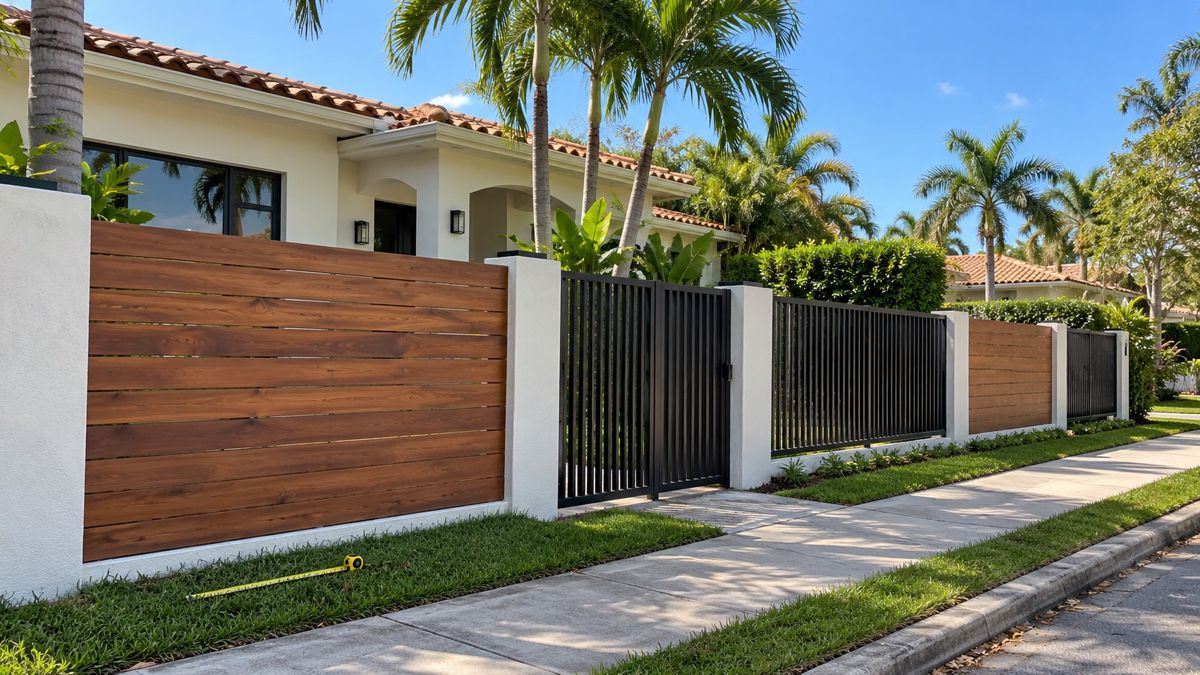
Most fence installations in Miami land somewhere between about $15 and $70 per linear foot, depending on the material, the height and the ground. A typical backyard job often adds up to a few thousand dollars, and a long run with gates can reach well into five figures. These are rough market guides, not quotes from Miami Fencing. The real number depends on your lot.
What is the typical cost per foot for each fence type?
Here are broad ranges for installed fence in the United States, with notes on where South Florida tends to sit. Treat them as a starting point only.
- Wood privacy fence: roughly $20 to $45 per linear foot for a six foot fence. Board on board and better lumber sit at the top.
- Vinyl fence: roughly $25 to $60 per linear foot. Privacy panels cost more than picket or rail styles.
- Chain link: roughly $12 to $35 per linear foot. Plain galvanized costs least, vinyl coated costs more, and taller or heavier-gauge fence costs more again.
- Aluminum: roughly $30 to $70 per linear foot, depending on the panel style and height.
- Ornamental iron or steel: roughly $40 to $100 or more per linear foot, depending on the design and finish.
Gates are priced on top of that. A simple walk gate costs far less than a wide driveway gate, and a gate with an automatic opener costs more again.
How do you work out the cost of your own fence?
Start by measuring the line. Multiply the length in feet by the per-foot range for the material you like, then add gates and extras. A 150 foot wood fence at the ranges above would come to roughly $3,000 to $6,750 before gates, removal and permit costs. Use the result to judge whether a quote is in a sensible area, not to budget to the dollar.
One more thing to keep in mind is height. A four foot fence costs less than six, and some jobs, such as pool barriers, have height rules that decide the answer for you.
What pushes the price up or down?
Two homes on the same street can get very different quotes. These are the usual reasons.
Material and style
Wood is cheaper to buy but needs sealing and may need replacing sooner in humid weather. Vinyl and aluminum cost more up front and need less upkeep. Chain link is the budget choice for security and pets. Our pages on wood fencing and vinyl fencing go through the trade-offs in more detail.
Ground and access
Much of Miami-Dade sits on shallow limestone rock with a high water table. Drilling post holes in rock takes more time and sometimes different equipment. Tight side yards, no vehicle access and trees along the line also add labor.
Length, corners and slopes
Every corner and every change in grade means extra posts and extra cutting. A simple straight run is the cheapest kind of fence per foot.
Old fence removal
Pulling out and hauling away an existing fence is often a separate line on the quote.
Why can fences cost more in Miami-Dade than elsewhere?
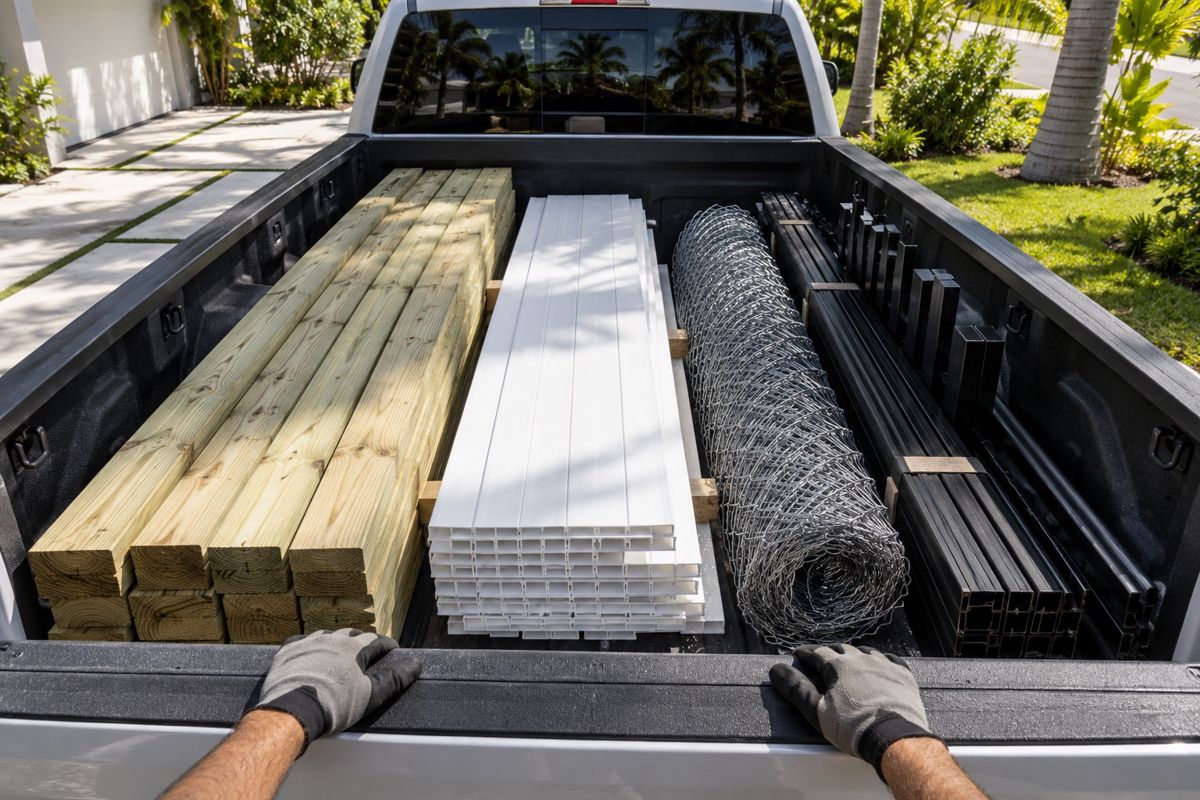
Miami-Dade sits in what the Florida Building Code calls the High Velocity Hurricane Zone. That can mean stricter requirements for how fences are built and for the materials used, and some products may need local approval. Installers who build for wind loads often use deeper posts, heavier hardware and more concrete. That raises cost, but it also reduces the chance of a fence leaning or failing in a storm.
Salt air near the bay and coast adds another cost. Stainless or hot-dip galvanized fasteners, powder coated aluminum and treated lumber cost more than basic materials, and they last longer in this climate. Termites add a reason to pay attention to lumber grade on wood fences.
Permits can also change the total. Many fences in Miami-Dade need a permit, and the fee and the paperwork vary by city. HOAs and condo boards may limit height, color and style. Check your documents early, because a design change after the quote can change the price.
What costs surprise homeowners?
- Permit fees and any survey or drawings the city asks for.
- Extra posts where the ground is rocky or the line is uneven.
- Gate hardware, which can cost more than the gate itself for heavier or wider gates.
- Tree roots, sprinkler lines and buried utilities that force a change in the plan.
- Staining or sealing wood after it is built.
- Electrical work for automatic gates, which may be a separate trade.
Ask each contractor to list these items in writing, or to say clearly that they are excluded.
How do you compare fence quotes fairly?
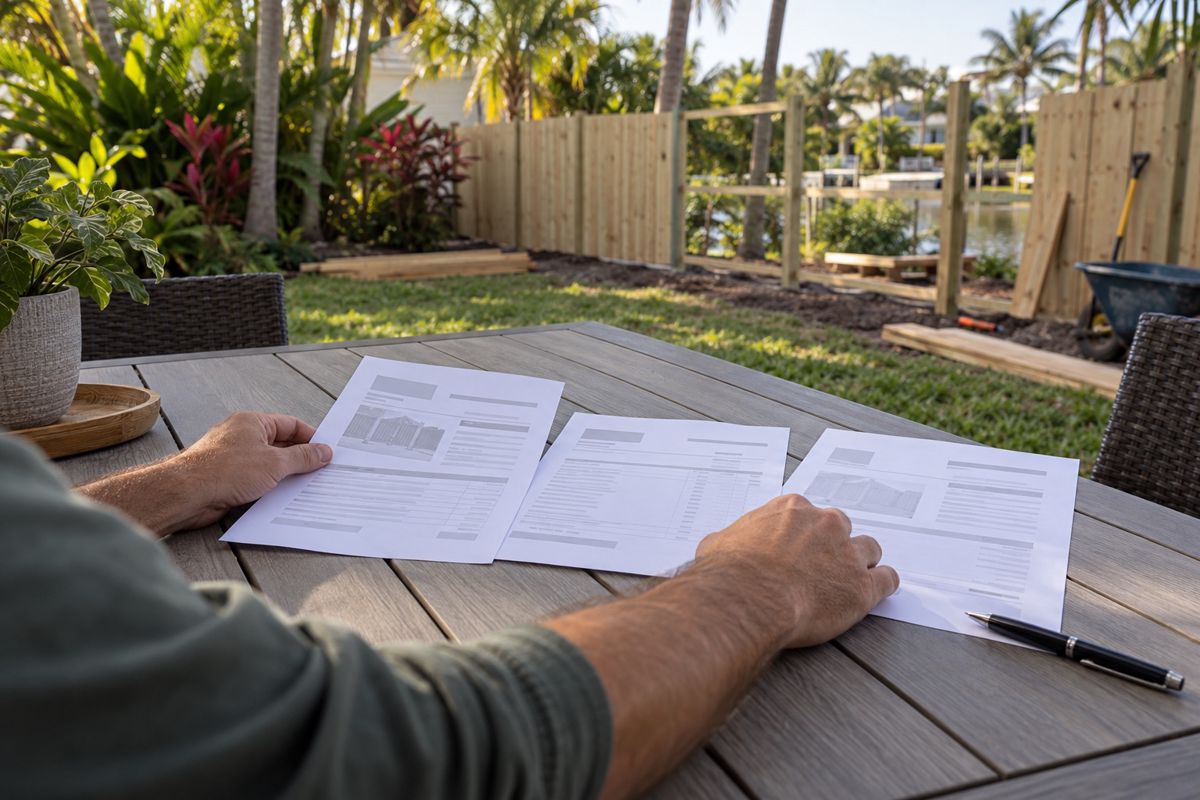
Get at least two or three written quotes for the same fence. A fair comparison means the same length, height, style and gate count on every quote.
- Check that each quote names the material and grade, not just the type.
- Look at how deep the posts go and what holds them.
- Ask which fasteners and hinges are used and whether they suit salt air.
- Find out who pulls the permit and whether the fee is included.
- Ask about removal of the old fence and cleanup.
- Ask to see a contractor's license and proof of insurance. You can also check licenses with the state.
The lowest number is not always the cheapest fence. A quote that leaves out permits, gates or post depth can cost more by the end of the job.
Where should you start?
Decide what the fence is for first: privacy, a pool barrier, pets, security or looks. Then pick the material that suits it. If you want screening, look at wood privacy fence installation. For a pool or front boundary, see aluminum and ornamental iron fencing. If an existing fence is leaning or a gate is dragging, fence repair may cost far less than a full replacement. When you are ready for a written quote based on your own lot, contact Miami Fencing from our home page.